
The Day I Met the Dalai Lama
I met the Dalai Lama because I dropped a pile of library books. What followed was a few quiet minutes of kindness, laughter, yoga, and a smile I have carried with me for more than thirty years.
Move. Breathe. Be.
I met the Dalai Lama because I dropped a pile of library books. What followed was a few quiet minutes of kindness, laughter, yoga, and a smile I have carried with me for more than thirty years.
Breathing changes under pressure. Heart rate rises, ventilation usually becomes faster, muscles prepare for action and attention narrows toward whatever the nervous system has identified as important. These responses are not failures of self-control. They are part of a normal system designed to help a person respond to demand. Problems arise when the level of activation exceeds what the situation requires. Too much arousal can…
Breathing is the first movement of a yoga practice. Before the arms rise, the spine folds, or the body balances, the diaphragm is already moving, the ribs are expanding and contracting, pressures inside the chest and abdomen are changing, and the respiratory system is continually adjusting to the needs of the body. Yoga takes this movement that is already happening and makes it part of…
Few ancient yoga texts are quoted more often than the Yoga Sūtras of Patañjali. Few are easier to quote without understanding. The book is short. Extremely short. The commonly received text contains 195 compact statements, or sūtras, totaling only around 1,200 Sanskrit words. You could print the basic Sanskrit text in surprisingly little space. Understanding it is another matter. What Is a Sūtra? The word…
Before reading the Yoga Sūtras of Patañjali, it helps to understand Sāṃkhya. Otherwise Patañjali can sometimes sound as though he begins his book halfway through a conversation. In a sense, he does. Many of the ideas behind classical Yoga were already part of a much larger philosophical discussion. Sāṃkhya supplied much of the framework Patañjali's Yoga would use to explain the mind, the body, consciousness…
The Bhagavad Gītā begins in a strange place for a book that would become one of the most influential texts in the history of yoga. A battlefield. Two armies are facing one another. Warriors are preparing to fight. Families, teachers, friends and relatives stand on opposite sides. And one of the greatest warriors on the field decides he cannot do it. His name is Arjuna.…
There is a simple version of yoga history that goes something like this: First came the Vedas. Then the Upanishads. Then Hindu philosophers developed yoga. The real history is considerably messier. Fortunately, it is also much more interesting. During the middle of the first millennium BCE, northern India was experiencing enormous social change. Cities were growing again after a long period in which large urban…
The Upanishads are often spoken about as though they were one ancient book. They are not. They are a collection of texts composed at different times, by different people, in different Vedic schools. The oldest principal Upanishads were probably composed during the first millennium BCE, with important layers appearing over several centuries. That long development matters because there is no single “Upanishadic philosophy” waiting neatly…
If we want to understand where yoga came from, the Vedas are an obvious place to begin. But they are also a good place to clear up one common misconception. The Vedas are not ancient yoga manuals. They come from a world considerably older than the yoga systems most people recognize today. There are no flowing posture sequences, no eight-limbed path, no studio class and…
Yoga is difficult to define because it has never been only one thing. Today, the word often brings to mind a room filled with mats and people moving through physical postures. That is certainly yoga, but it represents only one part of a much larger tradition that developed over thousands of years. Yoga has been philosophy, meditation, disciplined physical practice, spiritual inquiry, breathwork, ethics and…
People come to yoga for different reasons. Some want to become stronger or more flexible. Some want relief from sitting at a desk all day. Some are looking for a way to move that feels different from lifting weights, running or traditional exercise. Others arrive because life has become loud and they want an hour when they are required to pay attention to only one…
A white lotus floating on a dark lake, a deep reflection is created in the morning light. PowerFlo is a modern yoga practice and learning system built around a simple idea: move, breathe, pay attention, and learn something about yourself along the way. At its center is physical practice. We move through postures, transitions, balance, strength, mobility, breath and stillness. But PowerFlo is not only…
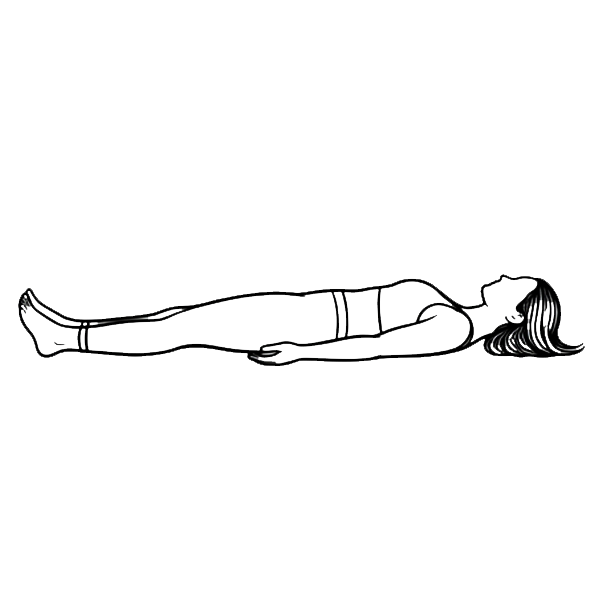
Restorative / Integration — Whole-body release · neutral support

Seated / Meditation — Hips · pelvis
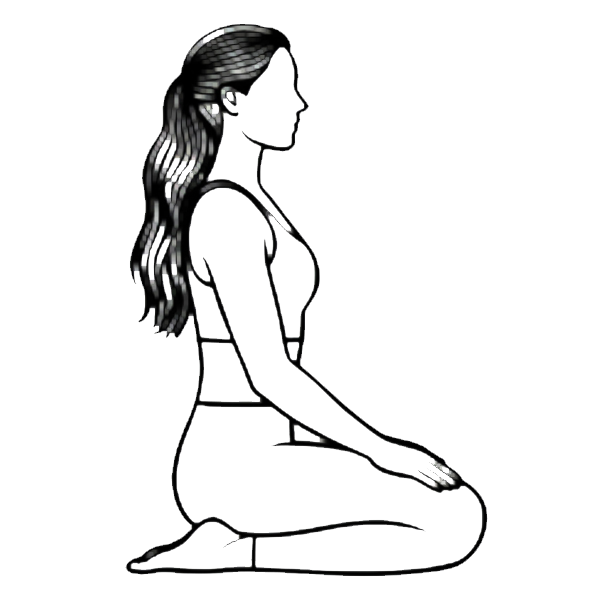
Seated / Kneeling — Quadriceps · ankles
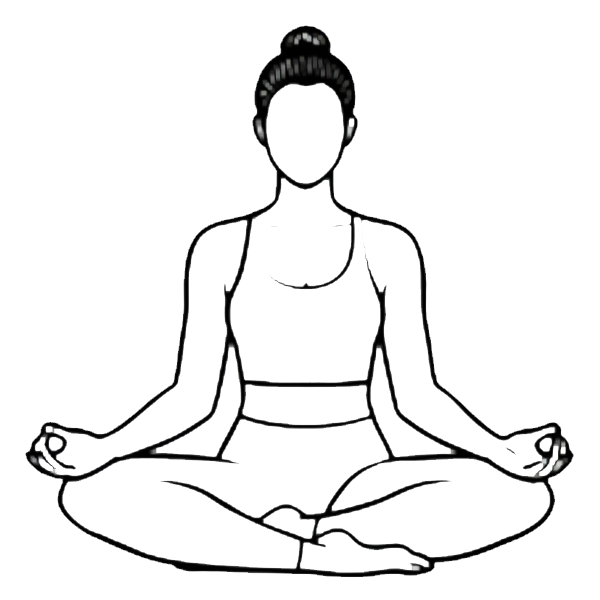
Seated / Meditation / Hip Opening — Deep hip external rotators · gluteals
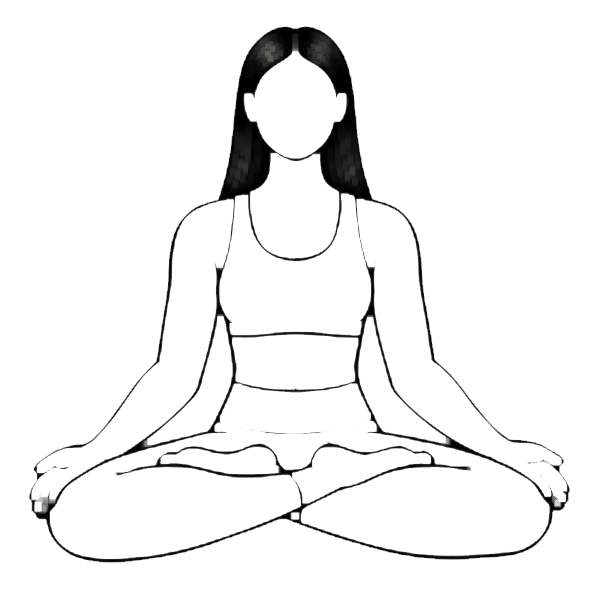
Seated / Meditation / Hip Opening — Deep hip external rotators · gluteals