
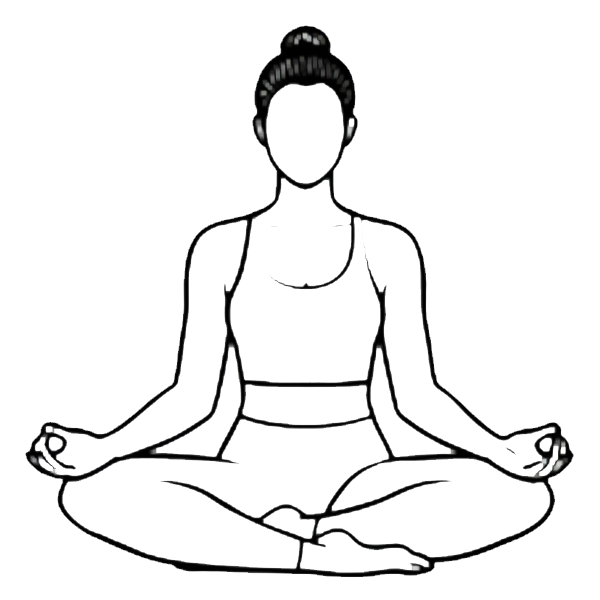
Padmasana
Pose family
Seated / Meditation / Hip Opening
Body focus
Deep hip external rotators; gluteals; adductors; knees and ankles under passive load
The Story
The Lotus in the Mud
The lotus became one of yoga’s most enduring images for a reason. Its roots disappear into mud while the flower rises clean above the surface. Nothing about the flower requires pretending the mud is not there. Padmasana carries that symbolism into the body: a quiet seat built from complicated hips, knees, ankles, history, and anatomy. The serenity of the final image can make people forget how demanding the shape is. Do not force a knee to create a picture of peace. The rotation belongs primarily in the hip. If the hips do not yet provide it, choose Half Lotus, Easy Seat, or support beneath the pelvis. The flower is not improved by tearing its stem.
The Body
Lotus requires substantial external rotation at both hips with deep knee flexion. The femurs must rotate in the acetabula so the feet can rest high on the opposite thighs without using the knees as rotational substitutes. The deep external rotators and gluteal tissues are involved, while the knees and ankles experience passive positioning that can become stressful if hip motion is insufficient. Elevating the pelvis can reduce the amount of hip flexion required and may allow the knees to descend more comfortably. Sharp knee or ankle discomfort is a clear reason to leave the pose; Padmasana is an optional meditation seat, not a prerequisite for meditation.
Instructor Anatomy
Primary muscles
Deep hip external rotators; gluteal muscles
Stabilizers / secondary
Spinal extensors; deep abdominals; pelvic stabilizers
Joint actions
Deep hip flexion and external rotation; knee flexion; ankle positioning
Anatomy cue
Turn from the hips; protect the knees
Instructor Notes
Create rotation at the hips, not the knees; elevate the seat; never force the feet into place