
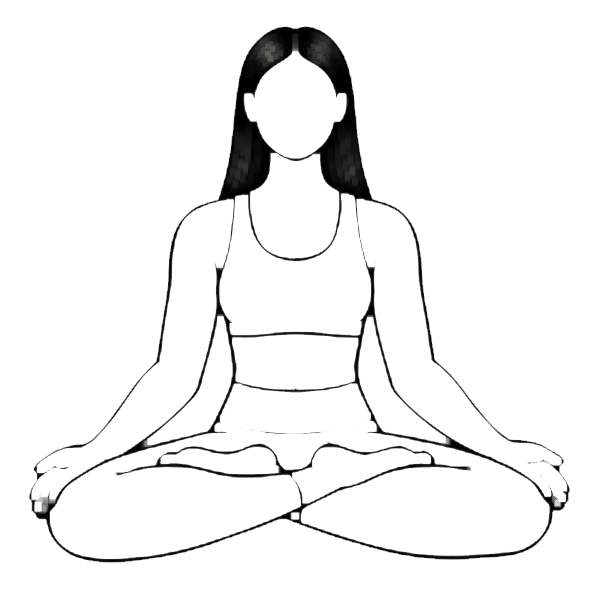
Padmasana
Pose family
Seated / Meditation / Hip Opening
Body focus
Deep hip external rotators; gluteals; postural muscles; knees and ankles under passive load
The Story
The Seat Inside the Flower
Seated Lotus is the quiet expression of Padmasana. The lotus image is ancient and simple: roots in mud, flower in light. The pose asks for the same separation between circumstance and attention. The legs create a compact base while the spine rises from it, but the stillness should never be purchased with knee pain. If the hips do not provide the rotation, the knees should not be asked to manufacture it. Sit higher. Take Half Lotus. Cross the legs another way. The meditation is not improved by forcing the shape. When the seat is appropriate, the body becomes quiet enough that the pose almost disappears, leaving only breath, posture, and attention.
The Body
Seated Lotus uses the same lower-body mechanics as Padmasana: deep bilateral hip flexion and external rotation with substantial knee flexion. The femurs need adequate rotation in the hip sockets so the feet can rest on the opposite thighs without torque being transferred to the knees. Once the base is comfortable, the spinal extensors, multifidus, and deep abdominal musculature maintain an upright trunk with minimal effort. Elevating the pelvis can reduce the hip-flexion requirement and allow the knees to settle lower. Any sharp knee or ankle discomfort is a reason to choose a less demanding seated position.
Instructor Anatomy
Primary muscles
Deep hip external rotators; spinal extensors
Stabilizers / secondary
Multifidus; transverse abdominis; pelvic stabilizers; scapular stabilizers
Joint actions
Deep hip flexion and external rotation; knee flexion; upright spinal extension
Anatomy cue
Let the pelvis support the spine; never borrow rotation from the knees
Instructor Notes
Build the seat from the hips; elevate the pelvis; choose stillness over forcing the knees