
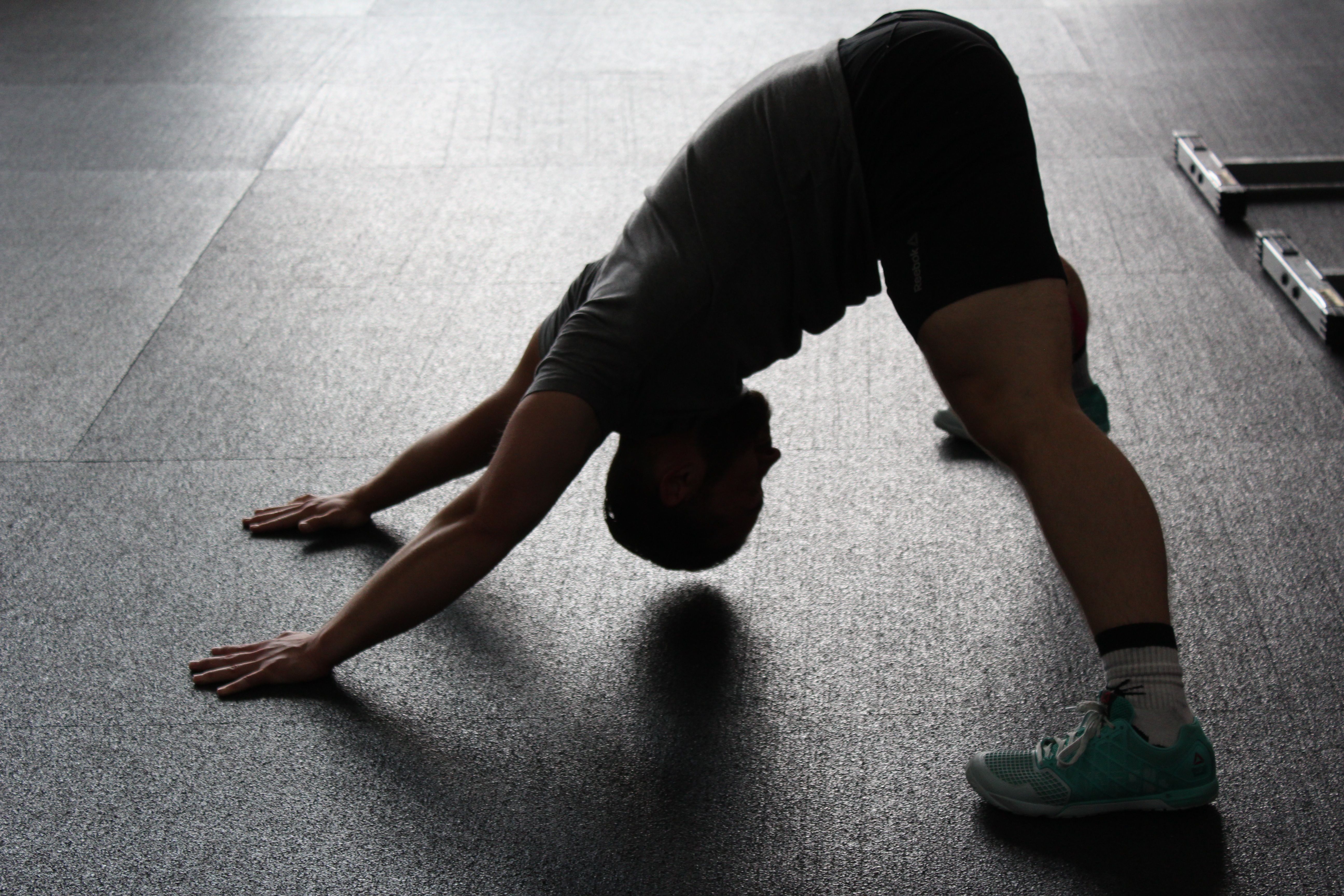
What PowerFlo Means
Power is easy to recognize.
A powerful athlete runs faster, jumps higher, lifts more weight, strikes harder or accelerates more quickly. Power announces itself. We can measure it, compare it and build training programs specifically to increase it.
Flow is harder to see.
Flow determines where power goes, when it arrives, how much is required, what should remain relaxed, what should engage next and when power should disappear altogether.
The distinction matters.
Because maximum power is rarely the same thing as maximum performance.
A tennis player may drive a forehand across the court with tremendous velocity. The opponent reaches it and, instead of answering force with greater force, softens the racket and places the ball barely beyond the net.
Less force.
Better answer.
The first player demonstrated power.
The second demonstrated something equally important: the ability to perceive the situation and apply precisely what it required.
That is the idea at the center of PowerFlo Yoga:
Appropriate power, intelligently applied.
Not maximum effort.
Not minimum effort.
The right effort.
At the right place.
At the right time.
For the right purpose.
Power Is Capacity
In physics and engineering, power has a precise meaning: it concerns the rate at which energy is transferred or work is performed.
But electrical engineering adds an important idea: producing power and directing power through a system are different problems.
Electrical grids do not succeed simply because generating stations can produce enormous amounts of energy. That energy must travel through an interconnected network and arrive where it is needed while the system remains stable. Engineers therefore concern themselves not merely with power generation but with power flow—including controlling the amount and direction of power through transmission networks.
The human body presents an interesting parallel.
An athlete may possess extraordinary muscular capacity, but that capacity still has to move through a system.
Consider a golf swing.
The ground supports the feet.
The legs respond.
The hips rotate.
The trunk transfers movement.
The shoulders continue it.
The arms and hands guide the club.
The club meets the ball.
A powerful pair of arms cannot compensate indefinitely for a poorly organized chain beneath them.
The same is true of tennis.
Ground.
Foot.
Leg.
Hip.
Trunk.
Shoulder.
Arm.
Racket.
Ball.
The athlete does not simply have power.
The athlete must transmit, redirect, moderate and release it.
Power is capacity.
Performance depends upon what happens to that capacity next.
Flow Is Not Weakness
There is a tendency in athletic culture to equate effort with effectiveness.
Push harder.
Run faster.
Lift more.
Drive farther.
Hit harder.
Some moments require exactly that.
But greater force is not automatically greater skill.
A skier who attacks every turn with maximum muscular effort becomes rigid and exhausted.
A golfer who attempts to overpower every swing loses timing.
A tennis player who tries to destroy every ball becomes predictable.
A runner who cannot change pace has only one answer to every problem.
An athlete needs access to maximum effort.
But an athlete also needs access to everything between zero and maximum.
That range is where much of mastery lives.
The great athlete can accelerate and decelerate.
Engage and release.
Attack and wait.
Drive and touch.
Hold and yield.
Move explosively and then become completely still.
The goal is not simply more power.
The goal is greater command of available power.
The Nervous System Already Understands This
The brain provides another useful analogy.
It is an extraordinarily complex information-processing network. Neurons communicate across circuits, and neuroscientists study not merely whether neural activity exists but how information propagates and how activity in different areas interacts to produce behavior.
The nervous system does not perform well by activating everything as strongly as possible.
Quite the opposite.
Useful movement requires selection.
Some muscles contract.
Others release.
Some sensory information receives attention.
Other information is filtered.
One motor pattern is selected among many possibilities.
Balance is continually recalculated.
Force is adjusted.
The system responds.
The intelligence lies partly in what does not happen.
Imagine attempting Tree Pose while contracting every muscle in the body as hard as possible.
There would certainly be effort.
There would certainly be muscular activity.
But there would not necessarily be balance.
The practitioner gradually discovers something subtler:
How much effort does the standing leg actually require?
Can the toes remain responsive rather than gripping?
Can the shoulders soften?
Can the jaw release?
Can the eyes remain steady?
Can breathing continue normally?
Can the body make hundreds of tiny corrections without the conscious mind interfering with every one?
The pose becomes an investigation into appropriate effort.
That lesson extends far beyond yoga.
The Difference Between Strength and Control
Strength asks:
Can you produce the force?
Control asks:
Can you produce the force you actually need?
These are different abilities.
A tennis player capable of a 120-mile-per-hour serve still needs a second serve.
A golfer capable of tremendous clubhead speed still needs a five-foot putt.
A soccer player capable of driving the ball across the field still needs to place a short pass accurately.
A skier capable of aggressively setting an edge must also know when to release it.
A basketball player who can explode toward the basket must be capable of stopping under control.
The greater the athlete’s available power, the more important control becomes.
Without control, increased capacity can simply produce larger mistakes.
This suggests another definition:
Power creates possibility.
Control makes possibility useful.
Yoga can train both.
Touch Is Not the Absence of Power
Touch is sometimes treated as something almost opposite strength.
It isn’t.
Touch is power under extraordinarily precise control.
Return to the tennis court.
One player drives the ball hard cross-court.
The opponent recognizes that the first player’s momentum has carried them deep and wide.
The obvious response might be another powerful shot.
Instead, the opponent absorbs the incoming energy, changes the racket angle and leaves the ball just beyond the net.
The ball travels only a fraction of the distance.
The shot may require dramatically less muscular force.
Yet it may be the more sophisticated athletic act.
The player had to perceive:
the opponent’s position,
the incoming trajectory,
the speed of the ball,
the available court,
the racket face,
their own balance,
and the opportunity.
Then apply almost exactly enough force.
Not more.
Not less.
Enough.
That is touch.
And touch wins championships too.
Yoga Expands the Athlete’s Vocabulary
Yoga does not need to replace strength training.
It does not replace coaching.
It does not replace technical practice, conditioning, nutrition, recovery or competition.
It gives the athlete another vocabulary.
Western athletic training is extraordinarily sophisticated at measuring output:
How fast?
How heavy?
How far?
How many?
How long?
Yoga introduces additional questions:
Where is the effort?
Is all of it necessary?
Where does tension interrupt movement?
Can breathing continue while the body is challenged?
Can one part of the body work while another remains relaxed?
Can attention remain stable when balance becomes unstable?
Can you recognize the difference between discomfort and danger?
Can you release effort as deliberately as you create it?
Can you remain present after making a mistake?
These questions do not oppose athletic performance.
They deepen it.
The Power of Restraint
The athlete is constantly deciding not only what to do but what not to do.
Do not chase the bad pitch.
Do not bite on the fake.
Do not rush the serve.
Do not swing at everything.
Do not force the turn.
Do not let the previous mistake determine the next movement.
Restraint is not passivity.
It is stored possibility.
A muscle capable of contracting but presently relaxed retains power.
An athlete capable of attacking but choosing to wait retains power.
A mind capable of reacting but choosing first to observe retains power.
The ability to refrain from unnecessary action is therefore part of performance.
This is one place where the broader tradition of yoga becomes particularly relevant.
Yoga does not concern itself exclusively with what the body can do.
It repeatedly returns to questions of discipline, restraint, breath, perception and attention.
The result is a very different conception of power.
Power does not have to announce itself to exist.
Breath: The Regulator Between Power and Flow
Breathing provides perhaps the clearest demonstration.
Breath responds automatically to effort, fear, excitement, fatigue and stress.
But breathing can also be influenced deliberately.
That makes it unusual.
It belongs partly to the automatic body and partly to conscious action.
For the athlete, this creates an extraordinary training tool.
You cannot command your heart simply to stop responding to pressure.
You cannot ask the crowd to become silent.
You cannot undo the previous point.
You cannot make the mountain less steep.
You cannot prevent an opponent from being good.
But you can return to the breath.
That single act does not magically solve the athletic problem.
It does something more practical.
It gives attention somewhere to return.
Breathe. See. Act.
Power becomes organized again.
Attention Is Part of Performance
Modern sports psychology increasingly recognizes attention as fundamental to performance, and research on athletic flow repeatedly identifies focused concentration, reduced distractibility, clear goals and the merging of action and awareness as important characteristics of the experience athletes often call being “in the zone.” Researchers are still investigating the exact neurocognitive mechanisms, so flow should not be treated as a neurological switch we fully understand.
But athletes hardly need a laboratory to know that attention matters.
They have experienced the difference.
There are days when every movement requires conscious effort.
And there are moments when the game seems simply to happen.
The ball appears larger.
Time feels different.
Movement becomes immediate.
The athlete stops narrating the performance and begins inhabiting it.
Research distinguishes different optimal states, including both flow and more deliberate high-pressure “clutch” performance, which is useful because athletic excellence does not always feel effortless. Sometimes performance requires deliberate effort and intense control.
That distinction reinforces the larger idea.
There is no single correct level of effort.
Sometimes performance asks for flow.
Sometimes it asks for deliberate exertion.
The skill is recognizing which state the moment requires.
PowerFlo in Competition
Before competition, PowerFlo may mean preparation.
Mobilize the joints.
Wake up the feet.
Engage the legs.
Organize the trunk.
Breathe.
Balance.
Rotate.
Focus.
During training, it may mean capacity.
Strength.
Stability.
Coordination.
Controlled range.
Proprioception.
Concentration.
After competition, the requirements change.
Now power may mean having the discipline not to continue pushing.
Slow down.
Lengthen the breath.
Release muscular effort.
Restore movement.
Allow the nervous system to settle.
Recover.
The same athlete requires different things at different times.
A useful practice should recognize that.
PowerFlo in Life
The principle does not stop when the game ends.
Life presents exactly the same problem in less measurable forms.
We possess limited resources:
physical energy,
attention,
time,
emotion,
money,
knowledge,
influence,
patience.
The question is rarely whether we can expend them.
We can.
The harder question is:
Where should they go?
Maximum effort applied indiscriminately is not mastery.
Working every hour available is not necessarily productivity.
Winning every disagreement is not necessarily strength.
Responding to every provocation is not control.
Accumulating endlessly is not security.
Speaking whenever we can speak is not wisdom.
Sometimes power means acting.
Sometimes power means waiting.
Sometimes power means holding a position.
Sometimes it means changing one.
Sometimes it means fighting very hard.
Sometimes it means recognizing that there is nothing worth fighting.
The principle remains:
Appropriate power, intelligently applied.
PowerFlo in Being
Eventually even performance disappears.
There is no ball.
No opponent.
No scoreboard.
No mountain.
No finish line.
There is simply a human being inhabiting a body, breathing and experiencing a moment.
Here the word power changes again.
It is no longer primarily the ability to move something outside ourselves.
It becomes the capacity to remain present without constantly needing to alter what is happening.
Sit.
Breathe.
Observe.
Allow sensation to arise and disappear.
Allow thought to arise and disappear.
Do not chase every thought simply because the mind produced it.
Do not resist every uncomfortable moment merely because it is uncomfortable.
The system still possesses enormous capacity.
It simply isn’t required to use all of it.
Perhaps one of the deepest expressions of power is possessing the ability to act while being completely comfortable not acting.
This Is PowerFlo Yoga
PowerFlo Yoga is not defined by how hot the room is.
It is not defined by how much someone sweats.
It is not defined by how quickly one posture follows another.
It is not defined by athletic clothing, flexibility, performance imagery or the appearance of difficulty.
Those can all exist within yoga.
They simply aren’t its boundaries.
PowerFlo begins with a broader proposition:
The human being is a system of extraordinary capacity.
Physical capacity.
Mental capacity.
Emotional capacity.
Attentional capacity.
We can develop those capacities.
But development alone isn’t enough.
We must also learn to direct them.
That means learning when to engage and when to release.
When to accelerate and when to wait.
When to produce force and when to use touch.
When to focus outward and when to turn inward.
When to pursue and when to recover.
When to move.
When to breathe.
When simply to be.
This is why PowerFlo can belong on a golf course, tennis court, ski mountain, soccer field, living-room floor or quiet place at the end of a difficult day.
The objective changes.
The underlying practice remains.
Develop capacity.
Cultivate awareness.
Apply what is needed.
Release what is not.
That is power under control.
That is flow with purpose.
That is PowerFlo Yoga.
Move. Breathe. Be.
