
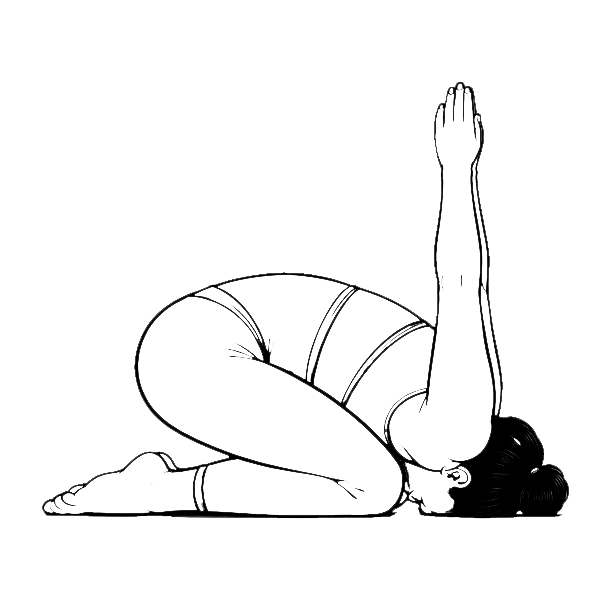
Sasangasana
Pose family
Kneeling Forward Fold / Spinal Flexion
Body focus
Thoracic and lumbar extensors in stretch; neck; shoulders; abdominals; quadriceps
The Story
The Hare in the Moon
Sasangasana is commonly translated as Rabbit or Hare Pose, and an old Sanskrit image links the hare with markings seen in the moon. The body curls into a small round shape that makes the name immediately understandable: knees grounded, spine arcing, crown lightly meeting the floor, hips lifting. It can feel playful, almost childlike, but the neck deserves adult judgment. The head is a point of contact, not the place to dump body weight. Let the hands hold the heels or calves, broaden the upper back, and make the roundness come from the whole spine. Think of becoming compact without becoming compressed.
The Body
Rabbit Pose emphasizes spinal flexion, particularly through the thoracic region, while the hips remain flexed and the knees deeply bent. The spinal extensors lengthen as the upper back rounds. The abdominals shorten to assist trunk flexion, and the quadriceps remain involved around the kneeling base. The cervical spine is flexed, so head placement and load management matter. The hands pulling on the heels can help broaden the scapulae and lengthen the upper back, but the crown should bear only light pressure. Practitioners with neck concerns or symptoms aggravated by head loading should choose another forward-folding shape.
Instructor Anatomy
Primary muscles
Abdominals; quadriceps; spinal extensors in stretch
Stabilizers / secondary
Scapular stabilizers; deep neck flexors; hip stabilizers
Joint actions
Spinal flexion; cervical flexion; knee flexion; hip flexion; scapular protraction
Anatomy cue
Make the back round; keep the crown light
Instructor Notes
Round through the upper back; keep most weight in knees and shins; crown is light