
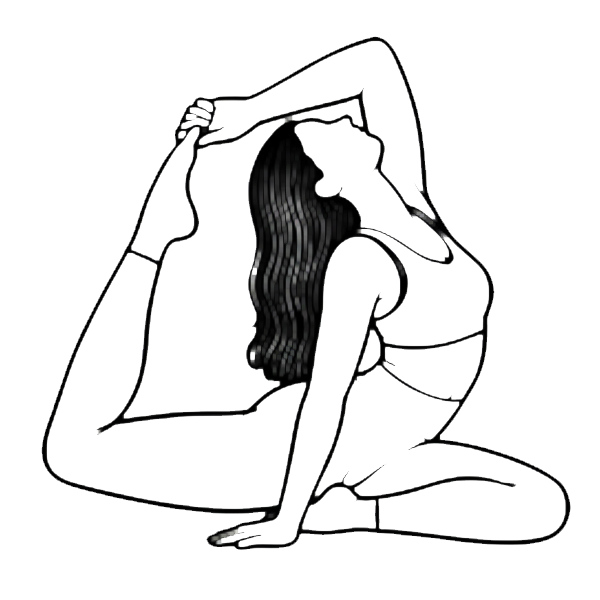
Eka Pada Rajakapotasana
Pose family
Hip Opening / Backbend Preparation
Body focus
Front-leg external rotators; back-leg hip flexors; gluteals; spinal extensors
The Story
The Pigeon Becomes a King
Pigeon begins close to the ground. One leg folds beneath the body, the other reaches behind, and the pelvis has to negotiate two very different jobs at once. The name King Pigeon suggests elevation, but the pose becomes regal only after the foundation is settled. There is no crown worth wearing on a crooked base. Let the front hip be supported if it needs support. Let the back leg extend straight behind you. Lift the chest before asking for a deeper backbend or a reach toward the rear foot. The useful image is not conquest but composure: a bird at rest, alert and upright, with enough ease in the hips that the spine can rise without being forced.
The Body
Eka Pada Rajakapotasana places the front hip in flexion and external rotation while the back hip moves toward extension. The front-leg deep external rotators and gluteal tissues are lengthened according to shin angle, while the back-leg iliopsoas and rectus femoris are lengthened. The pelvis often tilts or drops toward the front-leg side; support under that hip can reduce asymmetrical loading and help the spine lengthen. In more upright or backbending expressions, spinal extensors and scapular stabilizers become increasingly active. The front knee should remain free of sharp sensation; the pose should come from hip mobility rather than torque through the knee.
Instructor Anatomy
Primary muscles
Gluteus maximus and deep external rotators of front hip; back-leg iliopsoas and rectus femoris in stretch
Stabilizers / secondary
Gluteus medius; deep abdominals; spinal extensors; scapular stabilizers
Joint actions
Front-hip flexion/external rotation; back-hip extension; spinal extension in upright variation
Anatomy cue
Square as much as your hips allow; support what does not reach the floor
Instructor Notes
Support the front hip if it floats; keep back leg straight behind; never force the front knee