
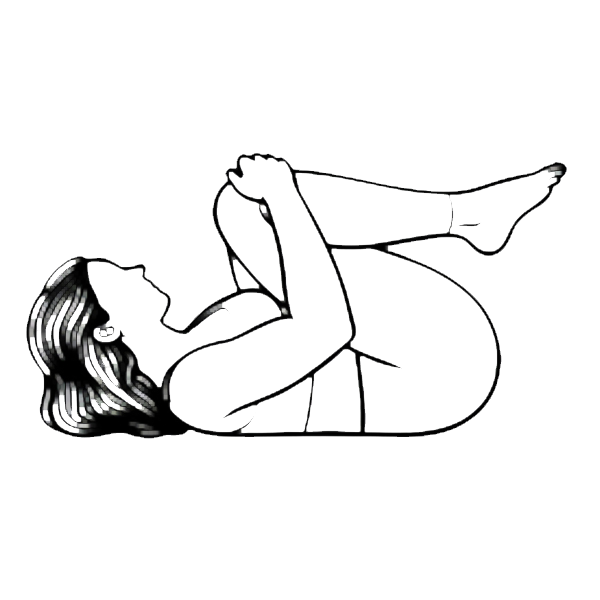
Apanasana
Pose family
Supine / Restorative / Hip Flexion
Body focus
Hips; lower back; gluteals; abdominal compression; breath awareness
The Story
Draw In Before Moving On
Knees to Chest looks almost like the body returning to itself. After standing, extending, balancing, or backbending, the legs fold in and the floor takes the weight. Nothing dramatic needs to happen. The shape creates a contained pause where the back body can spread into the mat and the breath can be noticed without another balance problem to solve. PowerFlo can use it as a reset: gather the body, feel where effort is still hanging on, and then decide what comes next. The pose is commonly called Apanasana. The useful experience is immediate and physical—drawing in without gripping.
The Body
Both hips and knees flex as the thighs move toward the trunk. Depending on how deeply the legs are drawn in, the pelvis may tip posteriorly and the lumbar spine may move into mild flexion. The arms provide light traction while the shoulders stay broad on the floor. Posterior hip, gluteal, and lower-back tissues may lengthen as the hip flexors shorten. The position also changes the available space for abdominal movement because the thighs approach the torso, so the breath may feel more directional into the side and back ribs. The knees do not need to reach the chest; reduce the range or hold behind the thighs if that keeps the shape easier and the breath quiet.
Instructor Anatomy
Primary muscles
Hip flexors lightly active; arm flexors if the legs are actively hugged
Stabilizers / secondary
Deep abdominals; scapular stabilizers; cervical stabilizers
Joint actions
Hip flexion; knee flexion; variable posterior pelvic tilt and lumbar flexion
Anatomy cue
Draw the thighs in only as far as the breath stays easy
Physiology / nervous system
Supine flexion reduces postural demand and is commonly used as a settling transition.
Instructor Notes
Hug lightly; Keep shoulders broad; Reduce the range if the breath gets compressed