
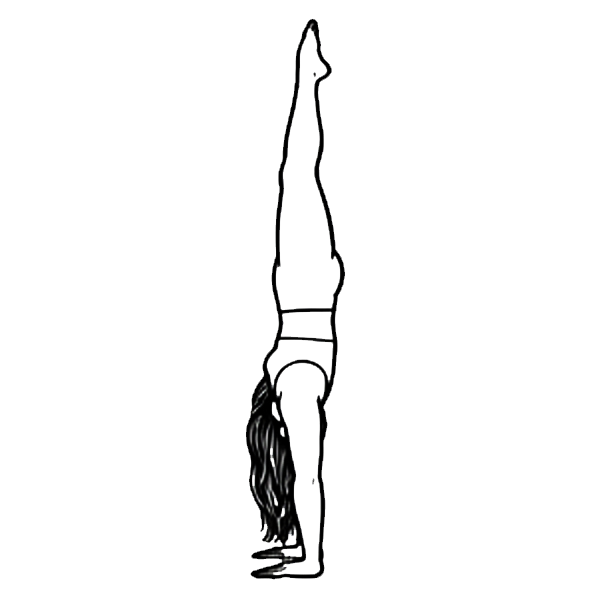
Adho Mukha Vrksasana
Pose family
Inversion / Arm Balance
Body focus
Shoulders; triceps; serratus anterior; wrists; core; gluteals
The Story
The Upside-Down Tree
The Sanskrit name for Handstand can be translated as the face-down tree. Turn a tree upside down and the metaphor becomes immediately clear: the hands become roots, the arms become the trunk, and the legs reach upward like branches. The interesting part is that trees do not balance by becoming rigid. They distribute force through an entire structure. Handstand works the same way. Fingers press, shoulders elevate, ribs organize, legs reach, and the body continuously corrects itself over a base no bigger than two hands. Fear often arrives before strength fails. The practice is therefore partly physical and partly a negotiation with being upside down. Root harder. Reach longer. Breathe. Let the world be reversed without assuming that anything has gone wrong.
The Body
Handstand is a closed-chain overhead weight-bearing position. The deltoids, triceps, serratus anterior, upper and lower trapezius, rotator cuff, and wrist/forearm musculature create the support base. Serratus anterior and trapezius upwardly rotate and stabilize the scapulae while the shoulders remain flexed overhead. The trunk must resist excessive lumbar extension, requiring coordinated abdominal and gluteal activity. The legs remain active and together to reduce unnecessary movement. Balance is managed largely through pressure changes in the fingers, palms, wrists, and shoulders. Wall-supported practice allows strength and line to develop before freestanding balance becomes the primary challenge.
Instructor Anatomy
Primary muscles
Deltoids; triceps brachii; serratus anterior; trapezius; forearm/wrist musculature
Stabilizers / secondary
Rotator cuff; transverse abdominis; obliques; gluteals; quadriceps; spinal stabilizers
Joint actions
Shoulder flexion; elbow extension; scapular upward rotation/elevation; wrist extension; trunk anti-extension; hip and knee extension
Anatomy cue
Root through the hands; reach through the feet
Instructor Notes
Spread fingers; push the floor away; elevate shoulders; keep ribs from flaring