
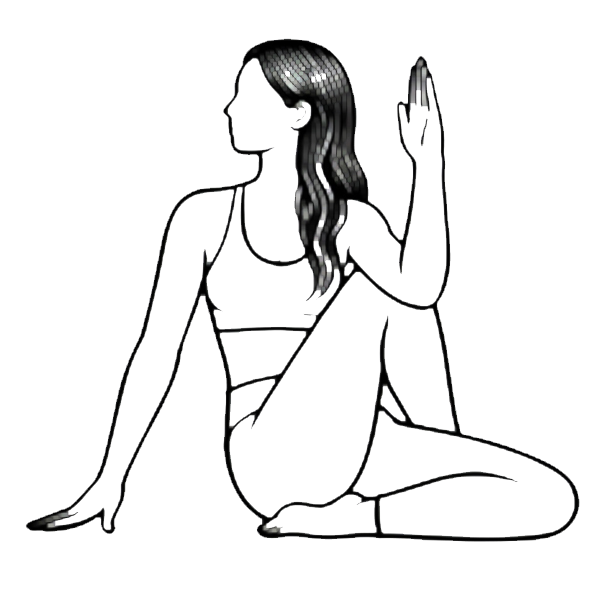
Ardha Matsyendrasana
Pose family
Seated Twist
Body focus
Obliques; multifidus; rotatores; thoracic spine; hips
The Story
The Fish Who Listened
One of yoga’s enduring stories says that Shiva was teaching Parvati the mysteries of yoga near the water. A fish listened so completely that the teaching transformed him. He became Matsyendra—Lord of the Fishes—and, in yogic lore, a great teacher. Half Lord of the Fishes carries that story into a seated twist. It is tempting to make the pose about how far the shoulders can turn, but the older image suggests something quieter: listen first. Root the sitting bones. Lengthen the spine. Let the breath create space. Then rotate around that length. The twist becomes less a performance of flexibility and more an act of attention—the body reorganizing itself because it has finally become still enough to hear.
The Body
Ardha Matsyendrasana is an axial spinal rotation performed from a seated base. The internal and external obliques create and control rotation, while multifidus and rotatores contribute segmental stabilization. Thoracic rotation should provide much of the visible twist; forcing motion through the lumbar spine, which is structurally less suited to rotation, can shift stress into the low back. The pelvis and sitting bones provide the base. The crossed-leg position also involves hip flexion and varying amounts of hip rotation. Lengthening the spine before rotating helps distribute motion and reduces the tendency to collapse or twist primarily through the neck.
Instructor Anatomy
Primary muscles
Internal and external obliques; multifidus; rotatores
Stabilizers / secondary
Erector spinae; transverse abdominis; pelvic stabilizers; deep neck flexors
Joint actions
Axial spinal rotation; hip flexion and rotation; cervical rotation as continuation of thoracic rotation
Anatomy cue
Get taller before you turn
Instructor Notes
Root the sitting bones; inhale to lengthen; rotate from the mid-back before turning the head