
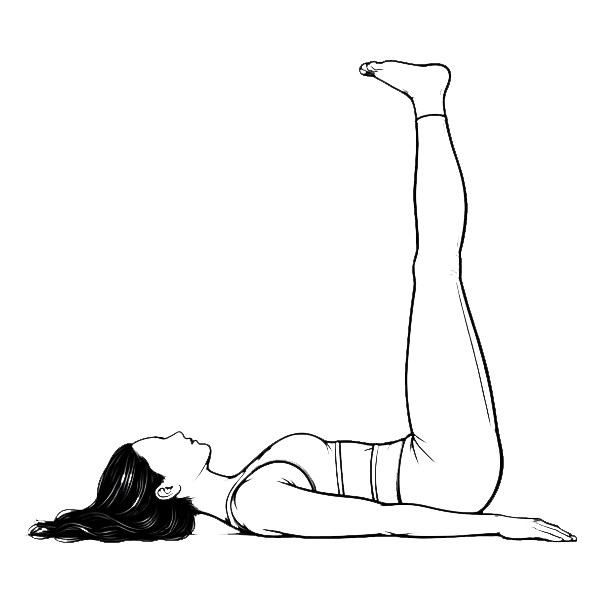
viparita karani
Pose family
Restorative / Passive Inversion
Body focus
Posterior legs; hip flexors; venous return; recovery; low postural demand
The Story
Turn the World Upside Down Gently
Legs Up asks almost nothing heroic. Lie down. Let the wall hold the legs. Allow gravity to do something different for a while. That simplicity is the story. We spend most of life carrying ourselves upright and moving toward the next task. Here the legs rise and the rest of the body is allowed to become heavy. The world has not changed, but your orientation to it has. Sometimes recovery comes not from doing more, but from deliberately changing the conditions and then leaving them alone.
The Body
The hips are flexed while the knees extend and the legs are supported by the wall. The posterior legs lengthen passively, the abdominal wall can soften, and postural muscle demand drops sharply. Elevating the legs changes the hydrostatic column acting on the lower limbs and can increase venous return toward the central circulation. This helps explain why swollen or tired legs may feel different afterward. Ray Long’s anatomy discussion also notes baroreceptor-related autonomic effects common to inversions.
Instructor Anatomy
Primary muscles
Passive stretch: hamstrings; gluteus maximus; gastrocnemius
Stabilizers / secondary
Minimal active demand; diaphragmatic and postural support as needed
Joint actions
Hip flexion; knee extension; passive inversion
Anatomy cue
Let wall support
Physiology / nervous system
Leg elevation changes hydrostatic pressure in the lower limbs and can increase venous return, altering pressure and sensation in tired legs.
Instructor Notes
Relax legs; Soften belly