
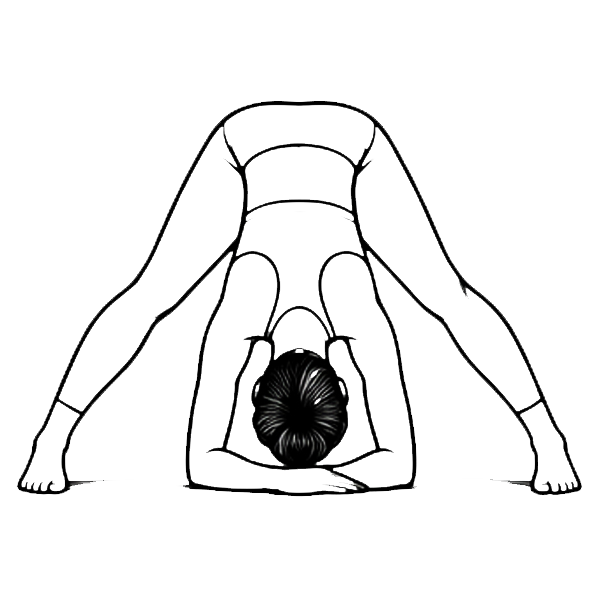
utthita lolasana
Pose family
Dynamic Standing / Forward Fold
Body focus
Hamstrings; gluteals; spinal extensors; hips; shoulders; breath rhythm; vestibular system
The Story
Let the Body Swing
Not every yoga pose needs to become a statue. Utthita Lolasana swings. The torso drops and rises, breath joins rhythm, gravity becomes momentum instead of an obstacle. There is something childlike about it: once the motion begins, the body wants to continue. Let it. Feel the weight of the head and arms. Feel the legs stay grounded while the upper body travels. Yoga can be disciplined without becoming solemn. Sometimes intelligence is knowing exactly where the movement is going; sometimes it is letting the movement teach you its rhythm.
The Body
The hips repeatedly flex and extend through a controlled hinge while the hamstrings and gluteal tissues lengthen and reload. Spinal extensors work to bring the torso toward horizontal, then release as gravity carries the body downward. The shoulders and arms contribute momentum without becoming the primary force. Repeated changes in head position challenge the vestibular system and alter hydrostatic pressure compared with upright standing. Because the movement is dynamic, heart rate and local blood flow can increase more than during a passive forward fold.
Instructor Anatomy
Primary muscles
Hamstrings and gluteals through repeated length/load; erector spinae during the lift
Stabilizers / secondary
Deep abdominals; multifidus; quadriceps; calves; shoulder stabilizers
Joint actions
Repeated hip flexion/extension; controlled spinal extension/flexion; changing head orientation
Anatomy cue
Keep knees soft
Physiology / nervous system
Dynamic movement increases muscular demand and circulation while repeated head movement challenges vestibular control.
Instructor Notes
Hinge hips; Swing easy